Solar Eclipse Glasses: How to Tell a Safe Pair (ISO 12312-2)
Affiliate disclosure: AstroGear Lab is a participant in the Amazon Services LLC Associates Program. If you buy through links on this page we may earn a commission at no extra cost to you. As an Amazon Associate I earn from qualifying purchases. How we choose products.
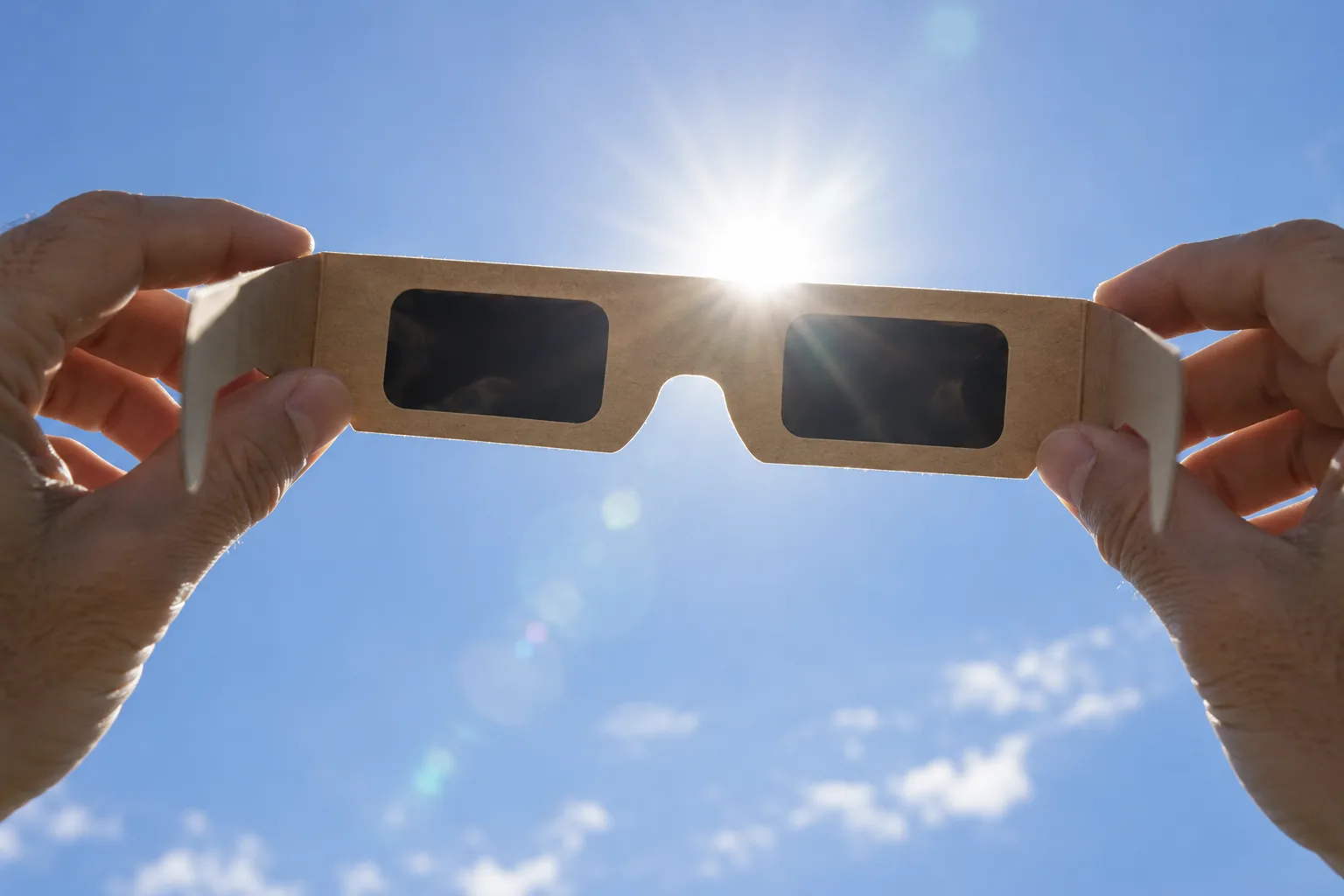
The short answer: safe solar eclipse glasses must meet the ISO 12312-2 international standard for direct solar viewing. Ordinary sunglasses, stacked sunglasses, smoked glass and homemade filters are not safe. Because fakes exist, the American Astronomical Society (AAS) advises buying from known manufacturers or authorised dealers those manufacturers publicly name, and not from whatever appears first in search results or ads.
Non-negotiable rules
- Looking at the Sun without proper protection can cause permanent eye damage, and it does not hurt while it happens.
- Eclipse glasses are for looking at the Sun with your bare eyes only. Never hold them in front of a telescope, binoculars or a camera lens; the concentrated light can burn through them and injure you.
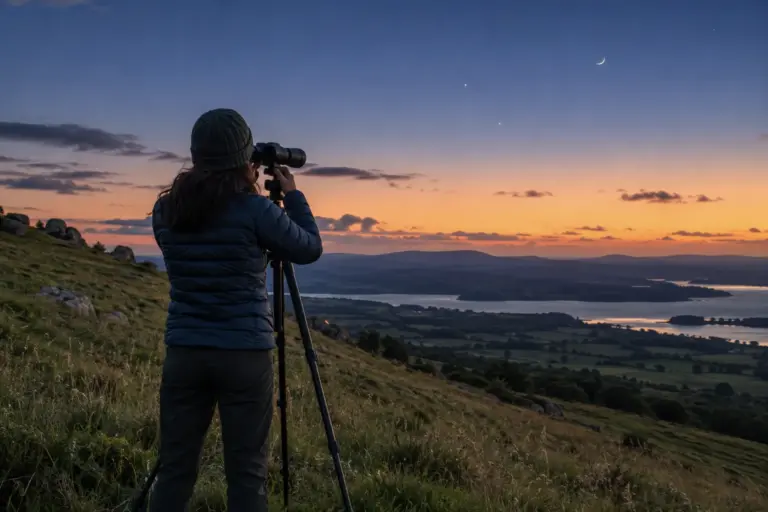
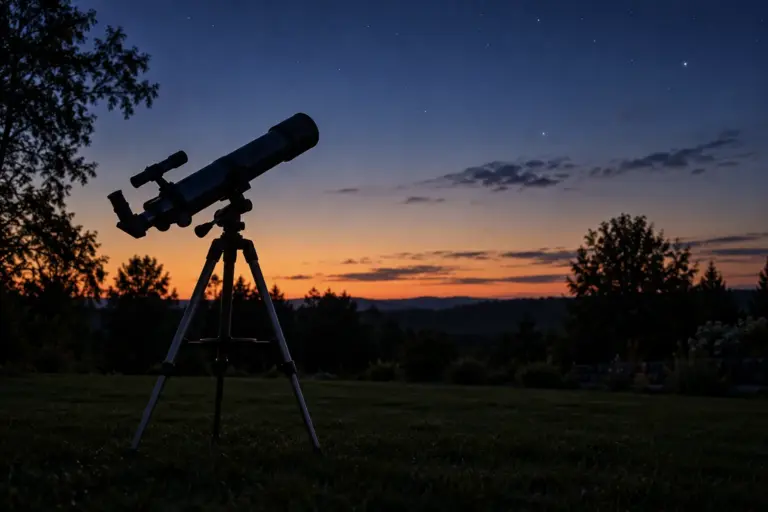
- Optics need their own certified solar filter mounted over the front of the instrument, never an eyepiece filter. The AAS warns that eyepiece filters are dangerous because sunlight concentrated by your optics can destroy them. See our solar filter guide.
- During the partial phases of a total eclipse the glasses stay on. Only during the short period of totality, when the Sun is completely covered, is it safe to look without them, and they go back on the moment any bright sliver returns.
How to tell if a pair is safe
- Look for the standard on the glasses. Genuine viewers state ISO 12312-2 and carry the manufacturer’s name and address. A label that only says “CE” or “ISO certified” without the standard number is not enough on its own.
- Check the manufacturer. The AAS keeps a list of manufacturers of solar viewers that meet the standard, at eclipse.aas.org/eye-safety/viewers_filters. If you cannot match the brand on your glasses to that list or to an authorised dealer the maker names, do not use them.
- Inspect them before every use. Look for scratches, pinholes, wrinkles or loose film. The AAS also has a page, “Are my solar viewers safe?”, on inspection. Replace any damaged pair.
- Do the indoor test. Indoors, the lenses should show almost nothing, perhaps a bright bulb as a faint dot. If you can see ordinary room objects clearly through them, they are not dark enough.
- Buy early. Supply tightened in the weeks before the 2024 eclipse and counterfeits appeared. The next total eclipse is on 2 August 2027 over Spain and North Africa, so sort your glasses well before you travel.
What about buying online?
Online marketplaces include both real and counterfeit viewers, and a listing that says “ISO certified” proves nothing by itself. We link to two listings below because they are marketed as ISO-certified eclipse glasses and are popular, but we cannot verify any individual listing, batch or seller. Treat a link here as a starting point and do the checks above on the pair that arrives, including matching the manufacturer to the AAS list. If in doubt, throw them away and buy from a manufacturer or authorised dealer the AAS names.
Certified eclipse glasses (check the maker first) Bulk pack for groups
Glasses, filters and cameras: what goes with what
| You are using | You need |
|---|---|
| Your eyes | ISO 12312-2 eclipse glasses |
| Telescope or binoculars | Certified full-aperture solar filter over the front (never glasses, never an eyepiece filter) |
| Camera or phone with a lens | A solar filter made for that lens; do not rely on the phone to protect itself or you |
| Total phase only (Sun fully covered) | Nothing: naked eye, then protection back on when the light returns |
Questions people ask
Are regular sunglasses safe for an eclipse?
No. Ordinary sunglasses, even very dark ones, do not block enough of the Sun’s light and invisible radiation for direct viewing. Only viewers meeting ISO 12312-2 are made for it.
Can I look at the eclipse through my phone?
Looking at the screen is safer than looking at the Sun, but pointing a phone camera at the Sun without a proper solar filter can damage the camera. Use a filter made for the lens.
Do I need glasses for the total eclipse itself?
Not during the brief totality when the Sun is completely covered. You need them for every partial phase before and after, and you must put them back on immediately when the Sun starts to reappear.
Where does the 2027 eclipse happen?
Totality crosses southern Spain, Morocco, Algeria, Tunisia, Libya, Egypt and Saudi Arabia on 2 August 2027. Our 2027 eclipse path guide lists totality times by city.
Source: American Astronomical Society solar eclipse safety pages (eclipse.aas.org), read 30 September 2026.
Read next
How we reviewed this (updated 16 October 2026): this page is based on manufacturer specifications, listing details and public buyer feedback. We have not hands-on tested the products listed.
Affiliate disclosure: AstroGear Lab is a participant in the Amazon Services LLC Associates Program. If you buy through a link on this page we may earn a small commission at no extra cost to you. As an Amazon Associate I earn from qualifying purchases. Product mentions are editorial choices, not paid placements. We do not quote prices or star ratings because both change daily. For solar equipment specifically, verify the ISO 12312-2 certification and the manufacturer yourself before buying; do not rely on any page, including this one. Read our full affiliate disclosure.