
How to Star Hop: Finding Objects Without GoTo
Star hopping is how most experienced observers still find objects, GoTo mount or not. A practical method for navigating the sky by eye and by chart.
Star hopping is how most experienced observers still find objects, GoTo mount or not. A practical method for navigating the sky by eye and by chart.

Heavens-Above, Spot the Station, phone alert apps, and Starlink-specific trackers compared, so you know which free tool to use for tonight’s pass.
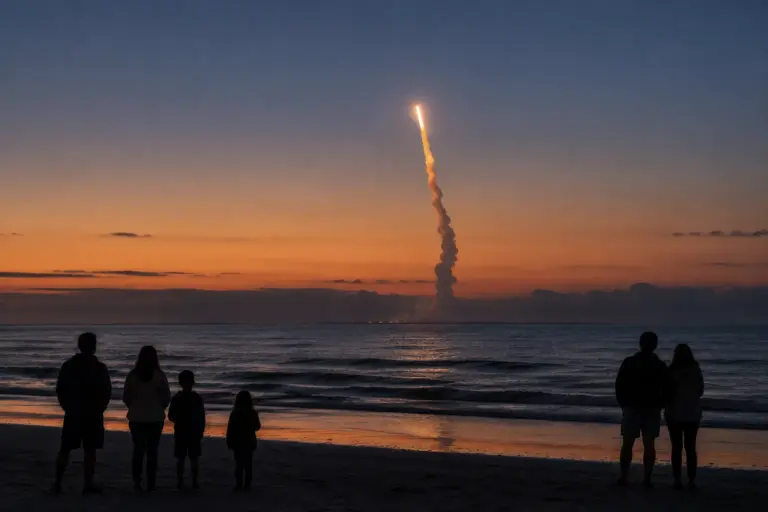
A practical, no-hype guide to watching a rocket launch in person: where you’ll realistically stand, why the sound arrives late, and what’s worth packing.
A Starlink launch briefly turns a stretch of sky into a moving line of lights. Here’s why the “train” effect happens, and exactly when and how to see one.
The ISS is the brightest thing in the night sky besides the Moon and Venus, visible to the naked eye in minutes — here’s how and when to actually see it.
Satellites really are visible to the naked eye—here’s when to look (dusk/dawn, not midnight), how to spot the ISS and Starlink trains, and how to tell them apart from planes.

The Geminids peak 13–14 December with a ZHR of 150, the highest of any annual shower. Slow, bright, multicolored meteors from asteroid 3200 Phaethon — no late-night wait required.
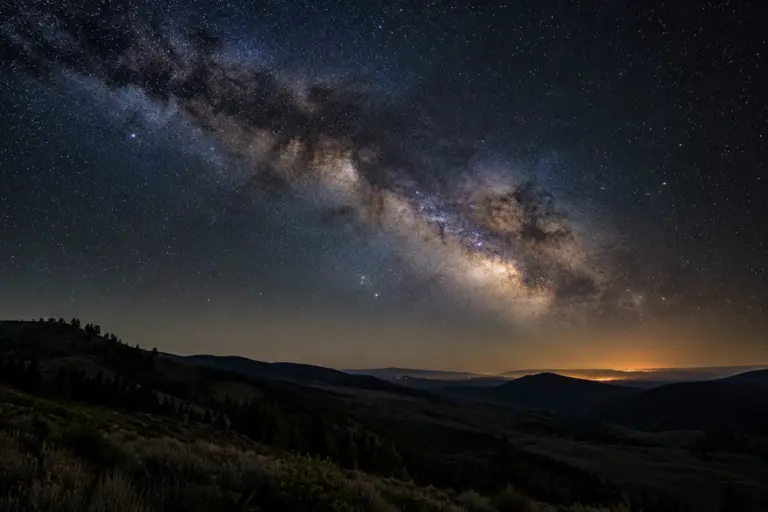
The Perseids peak 12–13 August with a ZHR of 100 and frequent fireballs — the most reliable, most-watched meteor shower of the year. Here’s how to watch.
The Orionids peak about 21 October 2026, but a bright gibbous Moon gets in the way. When to watch, where to look in Orion, and what rate to really expect.
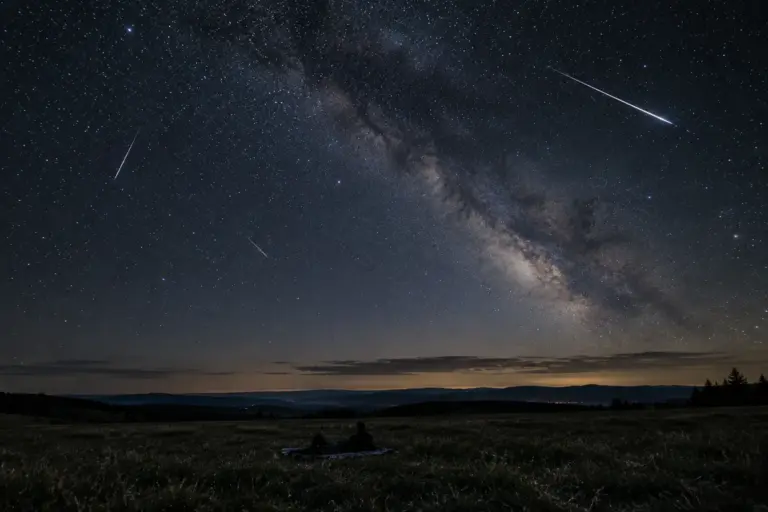
Eta Aquariids peak 5–6 May, ZHR 50, built from Halley’s Comet debris. Best in the tropics and south — here’s how northern observers still catch it.