Eta Aquariids Meteor Shower: Halley’s Comet at Dawn
Affiliate disclosure: AstroGear Lab is a participant in the Amazon Services LLC Associates Program. If you buy through links on this page we may earn a commission at no extra cost to you. As an Amazon Associate I earn from qualifying purchases. How we choose products.
Peak: 5–6 May · ZHR: 50 · Radiant: Aquarius, near the “water jar” · Parent body: 1P/Halley (Halley’s Comet) · Best window: the couple of hours before dawn
Exact dates and this year’s Moon phase are kept current on our astronomy events calendar — check it before you plan the night, since Moon conditions shift from year to year.
The Eta Aquariids are made of dust shed by Halley’s Comet, and every early May Earth plows through that debris trail again. If you’ve read our Orionids guide, you already know the other half of this story: the Orionids in October are the same comet’s debris, met on the opposite side of Earth’s orbit. Two showers, one comet, six months apart.
What makes the Eta Aquariids different from most of the showers we cover on this site is where you need to be standing. This is a shower that genuinely favors the Southern Hemisphere and the tropics over northern latitudes, and it’s worth understanding why before you set an alarm for 4 a.m.
Why the Southern Hemisphere gets the better show
The radiant — the point in the sky the meteors appear to stream from — sits near the “water jar” asterism in Aquarius. From southern latitudes and the tropics, that point climbs well up into the dark pre-dawn sky, so you get a longer window with the radiant high overhead and rates that can genuinely reach that ZHR of 50 (a theoretical rate seen under perfect dark-sky conditions with the radiant at the zenith, so treat it as a ceiling, not a promise).
From mid-northern latitudes, the radiant barely clears the horizon before twilight starts washing out the sky. You’re not seeing the shower at its best; you’re catching the tail end of a rising radiant in a narrowing dark window. Real counts for northern observers typically run well below that ZHR figure.
The northern trick: earthgrazers
Don’t write the shower off if you’re in the north. In the hour or two before the radiant itself rises, keep watching low on the eastern horizon anyway. Meteors that arrive when the radiant is just below the horizon travel nearly parallel to the atmosphere — these are earthgrazers, and they’re some of the best-looking meteors of the year. They’re slower to cross the sky, longer, and often dramatically bright because they’re skimming through more atmosphere at a shallow angle rather than plunging straight in. You’ll see fewer of them than a southern observer sees of the main shower, but the ones you do catch are memorable.
What to expect once you’re out there
| Detail | What to know |
|---|---|
| Speed | Fast — around 66 km/s, among the quickest of the annual showers |
| Trains | Frequent glowing trains that can persist for a second or two after the meteor itself is gone |
| Best time | The couple of hours before dawn, once the radiant has real altitude (or before it rises, for earthgrazers) |
| Gear needed | None — naked eye, a reclining chair, and a wide view of open sky beat any telescope for this |
How to actually watch it
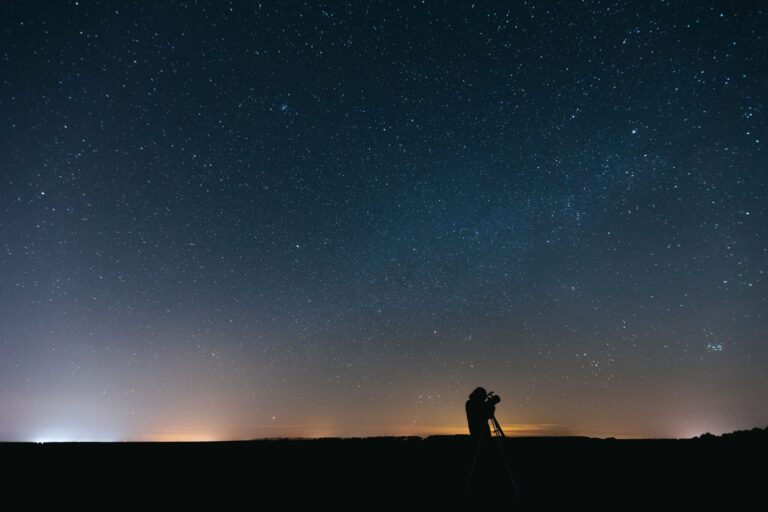
This is a naked-eye event, full stop. Optics narrow your field of view, and meteors can appear anywhere in the sky, so the best “equipment” is a dark spot away from streetlights, a chair or blanket that lets you lie back, and patience — give your eyes 20 minutes to adapt before you start counting. Face east, since that’s where the radiant sits and where earthgrazers will be lowest and longest.
The one piece of gear worth having is a dim red light so you can check a star chart or find your thermos without blowing out your night vision every time. A cheap small red torch does the job; we go into more detail on picking one in our red headlamp guide. If you want something to scan the sky with afterward — sweeping for a lingering train or a bright fireball’s smoke trail — a pair of 7×50 binoculars is genuinely useful for that, though it’s optional; don’t bring binoculars expecting to use them for the meteors themselves. Our binoculars guide covers other options if you already own a different pair. A planisphere can help you find Aquarius and get your bearings before the radiant rises, especially if the constellation is new to you.
Common questions
When exactly is the peak?
5–6 May, as listed on our astronomy events calendar. The shower itself is active for a broader window either side of that, but rates drop off quickly the further you get from peak night.
Do I need a telescope?
No. A telescope’s narrow field of view actively works against you here — you’d be pointed at one small patch of sky while meteors streak past everywhere else. Naked eye, wide open sky.
Why is the ZHR only 50 if it’s a Halley shower?
ZHR of 50 is already a solid number for an annual shower — it’s the same figure we list for this shower on our events calendar. It’s also a ceiling figure assuming a perfectly dark sky and the radiant directly overhead, conditions only southern and tropical observers really get for the Eta Aquariids. Actual counts from mid-northern latitudes run lower because the radiant never gets very high before dawn.
How is this different from the Orionids?
Same parent comet, different encounter. Earth crosses Halley’s debris trail twice a year — once in early May (Eta Aquariids) and once in October (Orionids) — on opposite sides of its orbit around the Sun. The Eta Aquariids favor the Southern Hemisphere; the Orionids are more evenly watchable and tend to run a bit calmer, with their own distinct radiant near Betelgeuse.
What Moon phase will I be dealing with?
That changes every year, so check our events calendar close to the date for the current year’s Moon illumination. A bright Moon near peak night will wash out the fainter meteors regardless of how good the shower’s underlying rate is.
Other meteor showers this year
- Quadrantids Meteor Shower: When and How to Watch — a sharp, short-peaked shower to open the year.
- Lyrids Meteor Shower: The Oldest Meteors on Record — humanity’s longest-documented meteor shower, active every April.
- Orionids Meteor Shower: Halley’s Comet, the Autumn Half — the Eta Aquariids’ companion shower from the same comet, six months later.
- Perseids Meteor Shower: The Best Night of the Meteor Year — the most-watched shower of the year, and for good reason.
- Geminids Meteor Shower: December’s Reliable Fireball Show — a strong, dependable shower to close the year out.
Affiliate disclosure: AstroGear Lab is a participant in the Amazon Services LLC Associates Program. If you buy through a link on this page we may earn a small commission at no extra cost to you. As an Amazon Associate I earn from qualifying purchases. Product mentions are editorial choices, not paid placements. We do not quote prices or star ratings because both change daily. Read our full affiliate disclosure.