Geminids Meteor Shower: December’s Reliable Fireball Show
Affiliate disclosure: AstroGear Lab is a participant in the Amazon Services LLC Associates Program. If you buy through links on this page we may earn a commission at no extra cost to you. As an Amazon Associate I earn from qualifying purchases. How we choose products.
The Geminids peak on the night of 13–14 December and top out at a ZHR of 150 — the highest of any annual shower, well ahead of the Perseids. Under a clear, dark sky that theoretically works out to more than two meteors a minute at the peak.
Radiant: Gemini, near the star Castor · Parent body: asteroid 3200 Phaethon (not a comet) · Best viewing window: 9–10pm through the early morning hours · Speed: slow, ~35 km/s, easy to trace. Check the events calendar for this year’s exact Moon phase.
If you only watch one meteor shower a year, the smart money says make it this one. The Geminids aren’t the most famous shower — that’s probably the Perseids, just by reputation and warm August nights — but by the numbers, the Geminids are the strongest show the sky puts on all year. A ZHR of 150 is the ceiling for any major annual shower, and unlike some showers that promise big numbers and then underdeliver, the Geminids have a reputation for actually showing up.
The catch, obviously, is the timing. Mid-December is cold, and cold keeps a lot of casual observers indoors. But the Geminids have a real advantage that makes the cold easier to justify: the radiant in Gemini is up at a useful altitude by early evening, so you don’t need to wait until 1 or 2am to see good rates the way you do with showers like the Orionids or the Eta Aquariids. If you can get outside by 9 or 10pm, you’re already in business.
Why the Geminids are different
A few things set this shower apart from the rest of the annual calendar:
| Trait | Geminids | Most other major showers |
|---|---|---|
| Parent body | Asteroid 3200 Phaethon | A comet (e.g. Halley, Swift-Tuttle) |
| Speed | ~35 km/s — slow, deliberate | 60+ km/s — quick streaks |
| Best viewing time | Early evening onward | Usually after midnight |
| Year-to-year reliability | Very consistent | Can be hit or miss (Lyrids, for one) |
| Meteor color | Often multicolored | Usually white/yellow |
The parent body is the strangest part of the story. Almost every major meteor shower comes from a comet shedding dust as ice sublimates near the sun. The Geminids come from 3200 Phaethon, which is classified as an asteroid, not a comet. It has no visible tail in the classic sense, yet it does appear to shed a small amount of dust when it swings close to the sun, which has earned it the nickname “rock comet.” Astronomers are still debating exactly what’s going on with Phaethon and how it manages to produce enough debris to feed the strongest shower of the year. Whatever the mechanism, the debris stream is a good one — dense, well understood, and Earth plows through it reliably every December.
The slower speed also changes what you actually see. Perseid and Orionid meteors can flash by so fast you catch them out of the corner of your eye and they’re gone. Geminids tend to move more deliberately across the sky, which makes them easier to follow and, for a lot of people, more satisfying to watch. They’re also frequently bright and multicolored — a side effect of the mineral makeup of the parent body — so keep an eye out for meteors with a slightly green or orange tint mixed in among the white ones.
How to actually watch them
You don’t need a telescope for this, and honestly a telescope will hurt more than help — meteors move too fast and too unpredictably across too much sky for any narrow field of view to be useful. This is a naked-eye event. What you actually need is simple:
- A dark spot away from streetlights. Even a modest amount of light pollution will cut your count significantly. If you can get out of town, do it.
- Warm clothes and something to lie back on. December nights are cold almost everywhere in the northern hemisphere, and you’ll be outside for a while if you want to catch a good run. A reclining chair or a blanket on the ground beats standing and craning your neck.
- 15–20 minutes for your eyes to adapt to the dark. Don’t check your phone during this window — the screen resets your night vision and you’ll be starting over.
- A dim red light if you need to see your notes, find something in your bag, or just not trip over the cooler. Red light preserves the night vision that white light destroys. We’ve got a rundown of options that won’t ruin the view: best red headlamp for stargazing.
Face roughly toward the east in the early evening as Gemini climbs, though meteors from this shower can appear in almost any part of the sky — you’re better off looking generally overhead and a bit away from the radiant rather than staring directly at Castor and Pollux. As the night goes on and Gemini rises higher, rates typically improve, so if you can stay out past midnight you’ll usually see more than you did at 9pm, though the early-evening rates are still worth the trip out on their own.
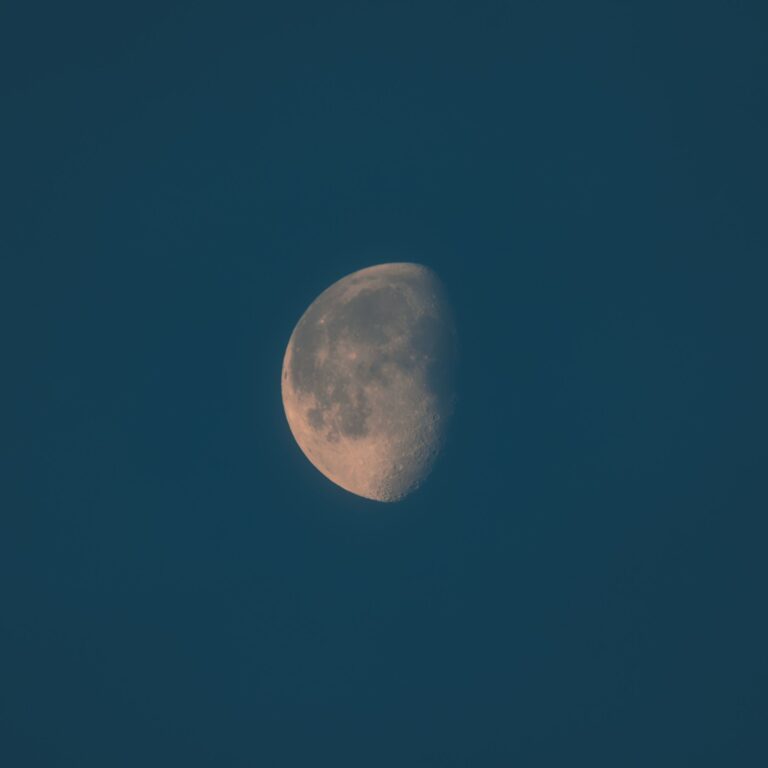
Moon conditions matter more for meteor showers than almost anything else you can control, since a bright Moon washes out all but the brightest meteors. That varies year to year, so rather than guessing, check the astronomy events calendar for the current year’s Moon phase and illumination before you plan your night.
Gear that’s actually worth having
Less is more for a meteor shower — the whole point is a wide-open naked-eye view, and gear that narrows your field of view works against you. That said, a couple of low-cost items genuinely help:
A small red flashlight or headlamp keeps your night vision intact while you’re setting up chairs, checking a star chart, or digging through a bag in the dark (small red LED torch on Amazon). It’s a five-dollar-category item that makes a real difference over the course of a few hours outside.
If a bright fireball leaves behind a visible smoke trail (a “train”), a pair of binoculars can be genuinely useful for a few seconds afterward — the train can drift and twist in upper-atmosphere winds and is worth a closer look while it lasts. A standard 7×50 pair is the classic astronomy binocular size, wide field and bright enough for this kind of quick, casual use (7×50 binoculars on Amazon). This isn’t essential gear for meteor watching generally, but it’s a nice-to-have if you already own a pair or want one for wider stargazing use too. For more on choosing a pair, see our best binoculars for stargazing guide.
One more low-tech tool worth having in your bag for any night under the stars, meteor shower or not, is a planisphere — it’s a fast, battery-free way to figure out what constellation you’re looking at without a phone screen killing your night vision.
Common questions
What’s the best time of night to watch the Geminids?
Unlike most major showers, the Geminids don’t require an after-midnight vigil. Rates are already worthwhile by 9–10pm because the radiant in Gemini rises earlier in the evening than radiants like Orion or Aquarius do. Rates generally keep climbing as Gemini gets higher through the night, so late evening through the pre-dawn hours are all reasonable windows — pick whichever fits your schedule.
Do I need a telescope or binoculars to see the Geminids?
No. This is a naked-eye event by nature — meteors can streak across a huge swath of sky in a fraction of a second, and any optic with a narrow field of view will make you miss almost everything. Binoculars are only worth grabbing briefly to examine the smoke trail left by an unusually bright fireball.
Why is the parent body an asteroid instead of a comet?
Most meteor showers trace back to comets, which shed dust as their ice sublimates near the sun. The Geminids are one of the few major exceptions, tracing back to 3200 Phaethon, an asteroid. Phaethon still seems to shed some dust on its close solar passes despite lacking a classic icy tail, which is why it’s sometimes nicknamed a “rock comet.” The precise mechanism is still an open question in the research.
Will the Moon ruin the show this year?
It depends entirely on the year and where the Moon’s phase falls relative to 13–14 December, so we don’t guess at it here. Check the current Moon illumination and phase on the site’s astronomy events calendar before you plan your night.
How does the ZHR of 150 compare to other showers?
It’s the highest of any annual meteor shower. For comparison, the Perseids — probably the most talked-about shower of the year — usually run in the 100 ZHR range, and most other annual showers are well below that. ZHR is a theoretical maximum under perfect dark-sky conditions with the radiant overhead, so actual counts from your backyard will be lower, but the relative comparison between showers still holds.
Other meteor showers this year
The Geminids are the strongest, but they’re not the only shower worth planning around. Here’s the rest of the annual lineup:
- Quadrantids Meteor Shower: When and How to Watch — a sharp, short-lived peak that opens the meteor year in January.
- Lyrids Meteor Shower: The Oldest Meteors on Record — a modest but historic April shower with an unpredictable streak.
- Eta Aquariids Meteor Shower: Halley’s Comet at Dawn — debris from Halley’s Comet, best from southern latitudes in May.
- Orionids Meteor Shower: Halley’s Comet, the Autumn Half — Halley’s Comet again, this time as an October show.
- Perseids Meteor Shower: The Best Night of the Meteor Year — the most popular shower of the year thanks to warm August nights.
Affiliate disclosure: AstroGear Lab is a participant in the Amazon Services LLC Associates Program. If you buy through a link on this page we may earn a small commission at no extra cost to you. As an Amazon Associate I earn from qualifying purchases. Product mentions are editorial choices, not paid placements. We do not quote prices or star ratings because both change daily. Read our full affiliate disclosure.