Perseids Meteor Shower: The Best Night of the Meteor Year
Affiliate disclosure: AstroGear Lab is a participant in the Amazon Services LLC Associates Program. If you buy through links on this page we may earn a commission at no extra cost to you. As an Amazon Associate I earn from qualifying purchases. How we choose products.
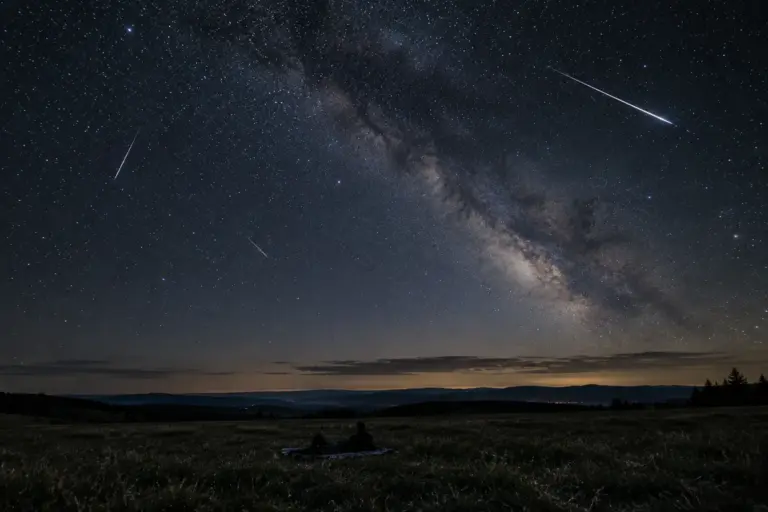
The Perseids peak on 12–13 August with a zenithal hourly rate (ZHR) of 100, radiating from Perseus, and they’re the debris trail of comet 109P/Swift-Tuttle. For most casual stargazers, this is simply the meteor shower — warm summer nights, a genuinely high rate, and more bright fireballs than any other shower on the calendar.
No telescope needed. Just your eyes, a dark sky, and enough patience to let them adjust. Check our events calendar for this year’s exact peak timing and Moon phase.
If you only watch one meteor shower a year, this is the one people mean when they say “go outside tonight, there’s a meteor shower.” It isn’t hype. The Perseids combine three things that don’t usually line up together: a high ZHR, a season when it’s actually pleasant to lie outside for two hours, and a track record of throwing bright, memorable fireballs rather than just faint streaks you half-see out of the corner of your eye.
Why the Perseids are the one everyone talks about
Every August, Earth ploughs through the dust and debris trail left behind by comet 109P/Swift-Tuttle — a large periodic comet, roughly 26 km across, currently out in the far reaches of its orbit and not due back through the inner solar system until 2126. It doesn’t matter that the comet itself is nowhere near us right now. The debris it has shed over thousands of past passes is spread all along its orbital path, and Earth crosses that path on the same August dates every year, comet or no comet.
What sets the Perseids apart from the other showers isn’t just the ZHR of 100, which is respectable but not the highest of the year. It’s the combination of that rate with genuinely warm, comfortable observing conditions across most of the northern hemisphere, plus a reputation — earned, not exaggerated — for producing a disproportionate share of bright fireballs. A “normal” Perseid is a quick, faint streak. But this shower throws enough slow, bright, sometimes fragmenting fireballs that even people who’ve never deliberately watched a meteor shower before tend to see at least one that makes them say something out loud.
Quick facts
| Detail | Value |
|---|---|
| Peak | 12–13 August |
| ZHR (peak rate under ideal skies) | 100 |
| Radiant constellation | Perseus |
| Parent body | 109P/Swift-Tuttle (comet, ~26 km, next inner-solar-system pass 2126) |
| Best viewing window | Late evening once Perseus clears the horizon, best from local midnight to just before dawn |
| Best for | Northern hemisphere observers (radiant stays low for southern latitudes) |
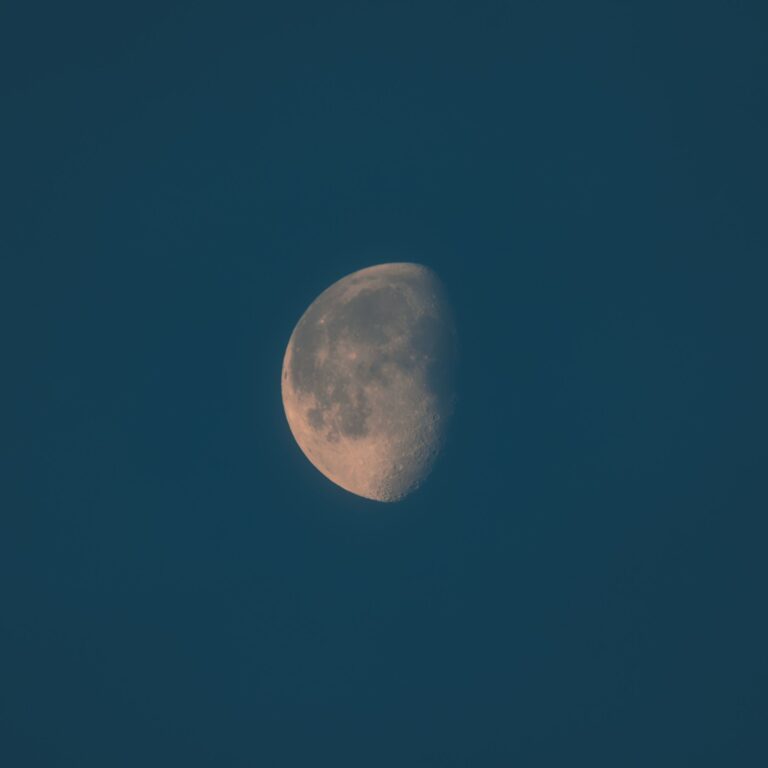
Moon illumination changes every year and can make a real difference to how many meteors you’ll actually see — a bright Moon near the radiant washes out the faint ones. Rather than quote a number here that will be wrong within twelve months, check the current year’s Moon conditions on our astronomy events calendar before you plan the night.
How to actually watch them
This is the easy part, which is half the appeal. No telescope, no binoculars required, no special app. What you need:
- A dark spot, away from streetlights. Even a decent backyard works if you can kill nearby lights; a proper dark-sky site will show you two or three times more meteors than a suburban one.
- Something to lie back on. A reclining chair, a blanket on the ground, the hood of a car — anything that lets you look up without straining your neck for an hour.
- 20–30 minutes of dark adaptation. Your eyes need real time to reach full night sensitivity. Checking your phone screen resets that clock, which is the single biggest reason people think they’re “not seeing much.”
- A red light, not a white one. If you need to see your feet, find your bag, or check a star chart, a dim red light lets you do that without blowing out your night vision the way a phone screen or white torch will. A small one is worth keeping in the car for exactly this — our red headlamp picks cover the options, and a basic small red torch (this one on Amazon) does the job for under the cost of a takeaway coffee.
- Patience, and roughly half the sky in view. You don’t need to stare at the radiant in Perseus — meteors can appear anywhere, and looking about 40–50° away from the radiant often shows longer, more dramatic trails.
A planisphere helps if you want to actually identify Perseus and the surrounding constellations while you wait between meteors — see our planisphere guide if you don’t already own one. It’s genuinely a one-time, low-cost purchase that makes every night under the stars more useful, not just this one.
Should you bring binoculars?
Not to watch the shower itself — meteors move too fast and cover too much sky for binoculars to help with the main event, and in fact binoculars narrow your field of view at exactly the moment you want it wide. Where a pair can earn its place is afterward: bright Perseid fireballs sometimes leave a glowing “train” of ionised gas that lingers for a few seconds to a couple of minutes, drifting and twisting as high-altitude winds pull it apart. A wide, bright pair of 7×50 binoculars is the classic choice for tracking one of those trains once you’ve spotted a good fireball, or just for a bit of casual scanning of the Milky Way during the slow stretches between meteors. We cover the options in our binoculars for stargazing guide; a solid 7×50 pair like this one is the standard recommendation for this kind of casual, grab-and-go night sky use. It’s genuinely optional — plenty of people watch the Perseids for years without ever bringing binoculars along.
Clouded out on peak night? You’ve still got a window
One practical advantage of the Perseids over some of the year’s other showers is that the peak is fairly broad. Rates build up for roughly a week beforehand and taper off for a few days after, rather than spiking sharply on a single night and vanishing. If clouds roll in on the night of 12–13 August specifically, it’s genuinely worth trying again the night before or the night after — you won’t see the absolute peak rate, but you’ll still see meaningfully more meteors than on an average night, which is more than can be said for showers with a sharper, narrower peak.
A note for southern hemisphere observers
The Perseids are, honestly, a northern hemisphere shower. Perseus sits far enough north in the sky that from most of the southern hemisphere the radiant barely clears the horizon, or doesn’t rise at all from more southerly latitudes. You can still catch some Perseids from places like southern Africa or northern Australia in the hour or two before dawn, but rates will be noticeably lower than what northern observers see, and from deep southern latitudes the shower is effectively not visible. If you’re in the far south, the Eta Aquariids and Geminids tend to be more rewarding options during their respective seasons.
Common questions
What’s the very best time of night to watch?
Perseus rises well before midnight for most northern-hemisphere observers, but rates climb steadily through the night and are highest in the few hours before dawn, once the radiant is high overhead and you’re on the leading, forward-facing side of Earth as it plows through the debris stream. If you can only manage one window, aim for 2 a.m. to just before first light.
Do I need a telescope?
No — and a telescope actively hurts here. Meteors streak across large stretches of sky in a fraction of a second; a telescope’s narrow field of view means you’d almost certainly be looking the wrong way when one appears. Naked eye, wide field, is correct for every meteor shower.
Why do some Perseids look like they’re barely moving while others flash by instantly?
Speed and brightness vary with the size and angle of the particle burning up, and with how close it passes to the radiant in your field of view. The slower, brighter ones are usually larger fragments and are more likely to be the fireballs that leave a visible train.
How many will I actually see, realistically?
The ZHR of 100 is a theoretical rate under perfect dark-sky conditions with the radiant directly overhead — you won’t hit that number in practice. Under a genuinely dark sky on peak night you might realistically see 40–60 per hour; from a typical suburban yard with some light pollution, more like 10–20. Moon brightness for the current year (check the events calendar) will push that number up or down further.
Other meteor showers this year
The Perseids are the headline act, but they’re not the only shower worth a night outside. If you enjoyed this one, here’s the rest of the year’s lineup:
- Quadrantids Meteor Shower: When and How to Watch — a sharp, short-lived January peak that’s easy to miss if you don’t know exactly when to look.
- Lyrids Meteor Shower: The Oldest Meteors on Record — April’s shower, tied to a comet with the longest recorded observation history of any meteor stream.
- Eta Aquariids Meteor Shower: Halley’s Comet at Dawn — debris from Halley’s Comet, best seen from the southern hemisphere in early May.
- Orionids Meteor Shower: Halley’s Comet, the Autumn Half — Halley’s other visit to Earth’s orbit, in October.
- Geminids Meteor Shower: December’s Reliable Fireball Show — often rivals or beats the Perseids for rate, if you don’t mind the cold.
Affiliate disclosure: AstroGear Lab is a participant in the Amazon Services LLC Associates Program. If you buy through a link on this page we may earn a small commission at no extra cost to you. As an Amazon Associate I earn from qualifying purchases. Product mentions are editorial choices, not paid placements. We do not quote prices or star ratings because both change daily. Read our full affiliate disclosure.